 COSDON CONSULTING
What does it actually cost to set up a habitat bank?
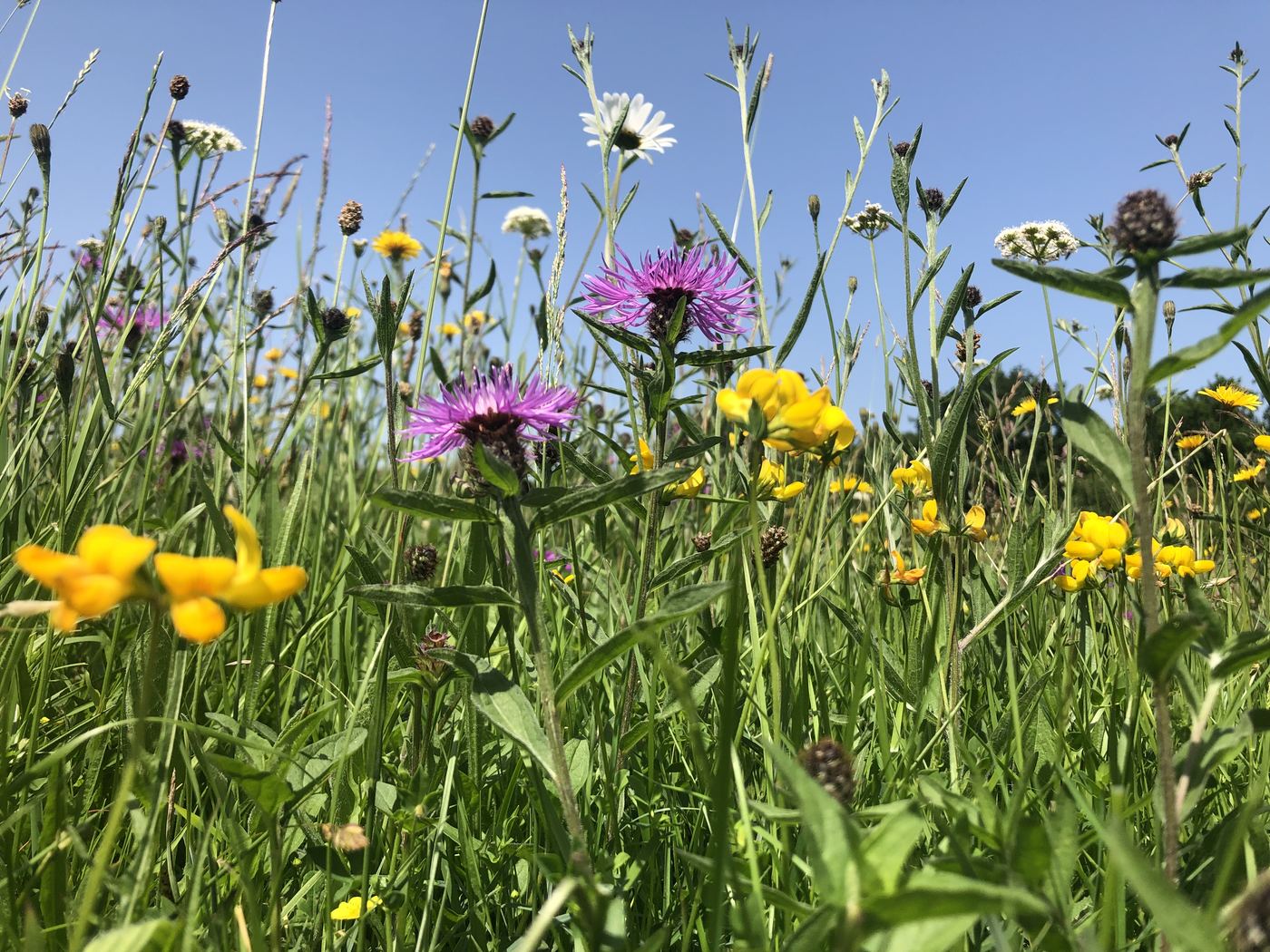
A thriving wildflower meadow — the kind of outcome the long-term costs below are working towards.
A landowner approached me recently with a site they were considering for habitat banking. Their first question wasn't about ecology; it was about money. Specifically, what does this actually cost if they went ahead, and what are they paying for at each stage?
There isn't a straightforward answer online, so I've put together a breakdown of the process as I understand it, and what's involved financially at each step. This isn't exhaustive, and it isn't a quote; it's a solid starting point for anyone weighing up whether habitat banking is right for their land.
To be clear about what follows; some of these are fees I'm committing to as my current rates. The rest are costs you're likely to encounter from other parties in the process, and long-term estimates based on what the process typically involves. I've kept those separate below.
Stage 1: Fees I'm committing to
These are the services I currently offer, and the rates I'm putting my name to. Rates below apply to sites in Cornwall, Devon, and Somerset; a slight increase applies further afield.
| Service | Fee |
|---|---|
| Habitat & hedgerow baseline survey (up to 20ha) | £595 |
| + River Condition Assessment (up to 0.5km watercourse) | +£595 |
| BNG feasibility assessment | £795 |
| Habitat Management & Maintenance Plan (HMMP) | £1,495 |
Baseline survey (£595)
Habitat and hedgerow condition assessment across the site, up to 20ha, fixed fee regardless of site complexity. This is the foundation everything else builds from. The one exception; where habitats present require additional botanical input (an NVC survey), this is charged in addition.
BNG feasibility assessment (£795)
Before committing to anything further, this determines the site's potential BNG uplift so you can make an informed decision about whether to proceed at all.
Habitat Management & Maintenance Plan (£1,495)
The document details implementation, management and remedial measures for your site and is suitable for submission to the Local Planning Authority (LPA) / Responsible Body to secure a legal agreement (S106 or Conservation Covenant). This includes checks for other constraints: contaminated land, historic land use, mining activity, and similar. A Local Environmental Records Centre (LERC) search and other environmental searches are required at this stage; these are charged at cost, separate from the £1,495 fee above, so budget £600 to be safe. Soil analysis is also required alongside this; it can be self-collected under guidance to reduce cost, at roughly £50 per sample, with one sample per field typically recommended (more depending on site conditions).
Stage 2: Costs you'll encounter from others
These aren't my fees; they're paid to third parties or statutory bodies as part of the process.
- Legal agreement (S106 or Conservation Covenant): typically £3,000–£10,000, payable to the LPA / Responsible Body. A solicitor to review the agreement before you sign is strongly recommended.
- Environment Agency / Natural England consultation: possible meetings and permits may be required before the legal agreement is finalised, to confirm your proposal meets requirements.
- Biodiversity Gain Site Register: £639, payable to Natural England, once your legal agreement is signed.
At this point your site is registered and able to sell units; the significant costs are only just beginning.
Stage 3: Running the site (the long-term numbers)
This is where most of the real financial exposure sits, and where it's easiest to underestimate.
- Implementation: grassland seeding, woodland creation, and similar works, potentially requiring ecological supervision.
- 30 years of maintenance and monitoring: typically at least eight ecological monitoring visits over the agreement term, with associated reporting. You may also pay the LPA/Responsible Body to verify your ecologist's findings, and there may be separate monitoring fees associated with this.
- Ongoing management: may include grazing (often at stocking densities lower than would be commercially viable on their own), hay cuts and collection, and arboricultural input for woodland areas.
- Marketing and admin: time spent quoting to developers and registering allocations against sold units.
- Remedial interventions: things go wrong; tree planting fails in drought, fencing needs repair, undesirable species establish and need managing. Budget for it, because it's close to inevitable somewhere across a 30-year term.
Why this matters for pricing your units
Every one of these costs, known and estimated, needs to be factored into what you charge per unit. It's straightforward to price units based on the visible, upfront costs and miss the long-tail liabilities that stretch across three decades. Get that wrong, and you find out you've been selling at a loss well after the point you can do anything about it.
This is exactly the kind of modelling worth getting right at the outset — pricing units to cover three decades of liability, not just the visible setup costs. It's a core part of the habitat bank support I offer.
Common questions
How much does it cost just to find out if habitat banking is right for my land?
£1,390 total: £595 for the baseline survey plus £795 for the feasibility assessment. That's what most landowners need before deciding whether to take things further.
What's the cost people most often underestimate?
The 30 years of maintenance and monitoring, not the setup fees. Grazing, hay cuts, arboricultural work, and remedial fixes add up over three decades in a way that's easy to miss when you're focused on the upfront numbers.
Do I need a solicitor?
Strongly recommended before you sign the S106 agreement or Conservation Covenant. This is a 30-year legal commitment on your land.
How much does registering the site cost?
£639, payable to Natural England, once your legal agreement is signed.
Considering your land for habitat banking?
If you or someone you know has land under consideration, I'd be glad to talk it through — no obligation, just a straight conversation about what's actually involved and whether it makes sense for your site.
Get in touchFigures above are correct as of August 2026 and intended as indicative guidance only. Third-party and statutory costs (legal fees, register fees) are subject to change and should be confirmed directly. This is not a formal quote.